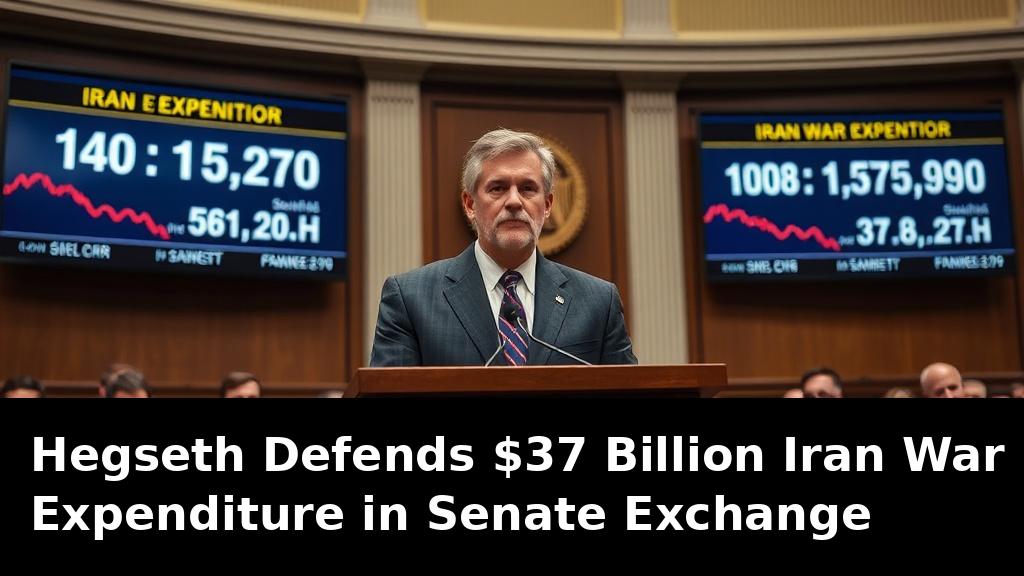
US Defense Secretary Pete Hegseth engaged in a tense exchange with Michigan Senator during a congressional hearing, after being labeled a failed leader in relation to operations involving Iran. The discussion centered on the reported $37 billion expenditure tied to the conflict.
Hegseth presented detailed figures outlining how the funds were allocated across various military operations. The total reflects costs incurred over an extended period of engagements in the region.
The hearing highlighted ongoing debates within Congress regarding the effectiveness and justification of such spending. Hegseth maintained that the expenditures were necessary to address specific security threats.
One key context is the broader pressure on the US defense budget, where allocations for overseas operations compete with domestic priorities including infrastructure and research initiatives. This dynamic often leads to intensified scrutiny during budget reviews.
Another aspect involves the historical pattern of cost escalations in Middle East engagements, where initial projections frequently expand due to extended timelines and unforeseen logistical demands. Such patterns have influenced legislative approaches to funding approvals in recent years.
The exchange underscores tensions between executive branch defense officials and legislative oversight bodies. Questions raised during the session focused on accountability measures and future spending controls.
Observers note that public disclosure of these figures may affect perceptions of military strategy effectiveness. The $37 billion amount represents a significant portion of recent supplemental funding requests.
Hegseth emphasized operational successes achieved despite the costs, while acknowledging challenges in meeting all stated objectives. The senator’s criticism centered on perceived shortcomings in leadership and planning.
Further analysis of the hearing reveals implications for upcoming defense authorization bills. Lawmakers are expected to reference these exchanges when deliberating on additional allocations.
The episode illustrates the intersection of fiscal oversight and national security policy in current US governance structures.