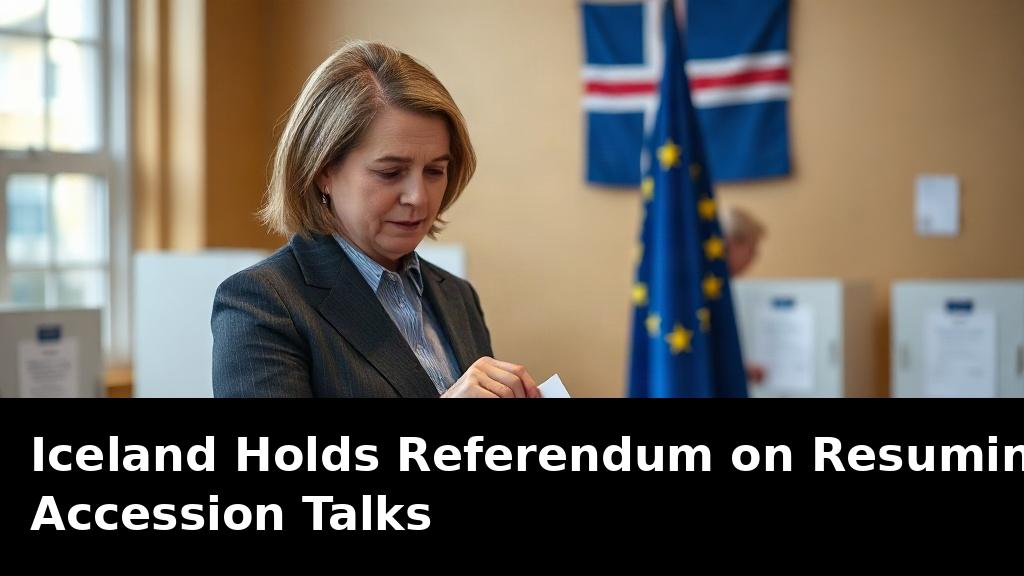
Iceland conducted a national referendum on Saturday to determine whether the country should resume negotiations for European Union membership. Prime Minister Kristrún Frostadóttir participated by casting her vote, underscoring the significance of the decision for the island nation’s future direction. The vote comes amid ongoing debates about economic stability, trade relations, and sovereignty that have shaped Iceland’s stance toward the EU for more than a decade.
The referendum addresses the possibility of restarting accession talks that were formally suspended in 2013. At that time, Iceland had already opened several negotiation chapters but chose to pause the process following shifts in domestic political priorities and public sentiment. Supporters of resuming talks argue that EU membership could provide enhanced access to the single market and greater influence in European policy-making, while opponents emphasize the importance of maintaining control over key sectors such as fisheries and energy.
Public opinion remains closely divided, reflecting deep-seated concerns about how membership might affect Iceland’s small, open economy. The fishing industry, which accounts for a substantial portion of export revenue, continues to be a focal point in the discussion. Any potential alignment with EU common fisheries policy would require careful calibration to protect national interests.
Beyond fisheries, the energy sector presents another dimension. Iceland’s abundant renewable resources, particularly geothermal and hydropower, have positioned the country as a leader in sustainable energy production. EU membership could open avenues for cross-border energy cooperation and technology exchange, yet it would also introduce regulatory frameworks that some stakeholders view as restrictive.
The outcome of the referendum will influence not only bilateral relations with EU member states but also Iceland’s broader positioning within the European Economic Area, of which it is already a participant. Analysts note that a decision to resume talks would likely trigger a lengthy negotiation period, during which detailed assessments of economic impacts and legal harmonization would be required.
Voter turnout and the final tally are expected to provide a clear signal of national consensus. Regardless of the result, the referendum highlights the ongoing tension between deeper European integration and the preservation of national autonomy that characterizes Iceland’s political discourse.