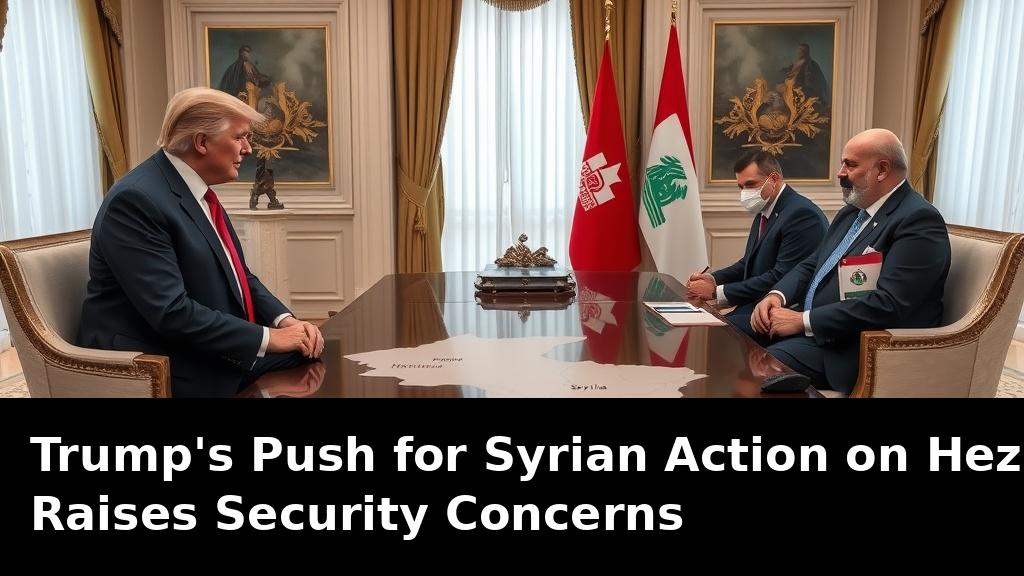
Analysts have expressed concern over recent pressure from the United States on Damascus to take military steps against Hezbollah in Lebanon. The approach is viewed as potentially undermining Syria’s own internal stability at a time when the country continues to recover from prolonged conflict.
The call for intervention comes amid ongoing regional tensions. Observers note that forcing Syrian forces into Lebanon could stretch limited resources and reignite domestic divisions. Syria’s government has already faced challenges in consolidating control over various factions within its borders.
One key point of analysis involves the historical dynamics between Syria and Hezbollah. Past alliances have allowed Damascus to maintain leverage in Lebanese affairs without direct confrontation. Shifting this balance through external pressure may weaken those ties and expose Syrian territory to renewed instability.
A second area of concern centers on the broader security implications for neighboring states. Heightened conflict along the Lebanon-Syria border could disrupt trade routes and complicate efforts by international organizations to deliver aid. This environment also raises risks for critical infrastructure projects that rely on regional cooperation.
Regional experts emphasize that any intervention would require careful coordination with local actors to avoid civilian casualties. Without such measures, the initiative could fuel further recruitment by non-state groups operating in the area.
The situation highlights the delicate nature of Middle Eastern diplomacy, where external demands often intersect with complex internal realities. Analysts continue to monitor developments closely for signs of escalation or diplomatic adjustment.