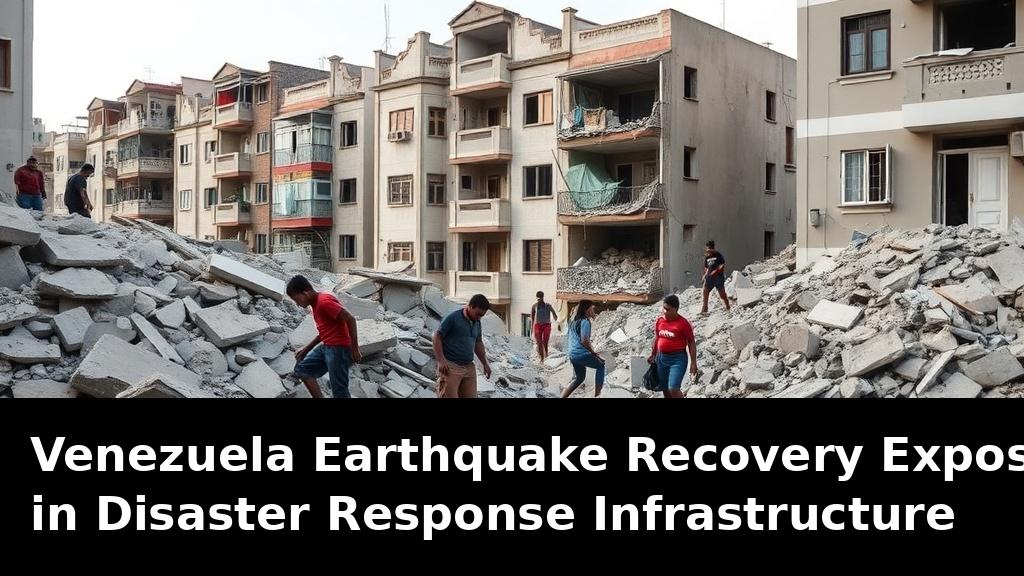
Weeks after powerful earthquakes struck Venezuela, families continue to sift through the debris of collapsed homes in search of belongings and missing relatives. The quakes, measuring 7.2 and 7.5 in magnitude, have left entire neighborhoods in ruins, with recovery efforts progressing slowly amid limited resources.
The scale of destruction has overwhelmed local authorities, forcing residents to rely on manual labor and basic tools. Many areas remain without reliable electricity or communication networks, complicating coordination between search teams and aid organizations. This situation underscores how critical infrastructure failures can extend the timeline for effective relief operations.
One key context is the vulnerability of aging building stock in the affected regions, where construction standards have not kept pace with modern seismic requirements. This has amplified the human cost, as structures that might have withstood lesser tremors failed catastrophically. Another relevant factor involves the broader economic pressures facing the country, which have constrained investments in early-warning systems and rapid-response technologies that could mitigate future impacts.
Recovery remains a protracted process, with officials indicating that full restoration of essential services may take months. International assistance has begun to arrive, yet logistical hurdles continue to delay distribution of heavy machinery needed to clear larger debris fields. Families persist in their searches, highlighting both resilience and the urgent need for improved preparedness measures.